Hog Wild: Fly Fishing Colorado's Taylor River
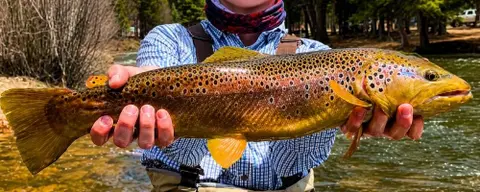
If you’re looking for Taylor River fly fishing, Colorado’s Gunnison Valley offers one of the most intriguing combinations in the West: technical tailwater fishing, big wild trout, spectacular mountain scenery, and enough public water to disappear for a while. The Taylor River is Colorado’s newest Gold Medal trout water, and according to Taylor River Anglers head guide John Evon, it can be brutally demanding one minute and ridiculously good the next. The payoff? Browns, rainbows and cutbows the size of your leg.
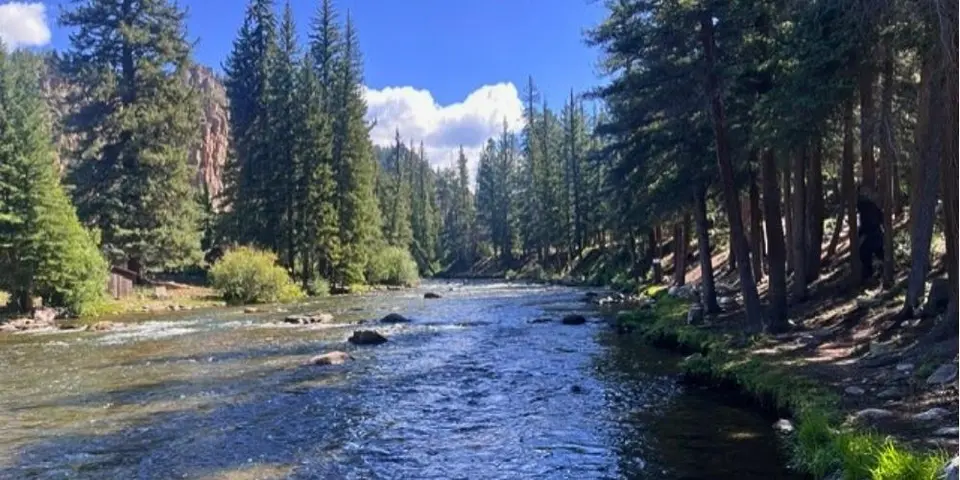
A Little River With Some Very Big Secrets
Here’s the first thing that got my attention: the Taylor isn’t some massive western river where you need a drift boat and a cannon for a fly rod. John figures it averages only about 50 feet across in many places, and yet a 40¼-inch rainbow trout—the current Colorado state record by length—came from the Taylor.
Forty inches. From a river you can practically cast across. As John told me, “There’s some monster fish in here.” That fish came from the Taylor’s famous catch-and-release section just below Taylor Reservoir, better known by a wonderfully subtle name: The Hog Trough.
Subtle it ain’t.
Listen to the full podcast
Welcome to the Hog Trough
The Hog Trough is less than half a mile long, and some enormous trout call it home. Unfortunately, every serious fly angler within driving distance seems to know that too. John told me he’s fished it in the middle of the night and still shared the water with roughly a dozen anglers, so no, this probably isn’t where you go to commune alone with nature.
But something strange can happen after dark. Sometimes, John says, the fish seem to “flip a switch” and start feeding aggressively. Out come the headlamps and glow-in-the-dark indicators, and one of Colorado’s most technical trout streams suddenly becomes a completely different place.
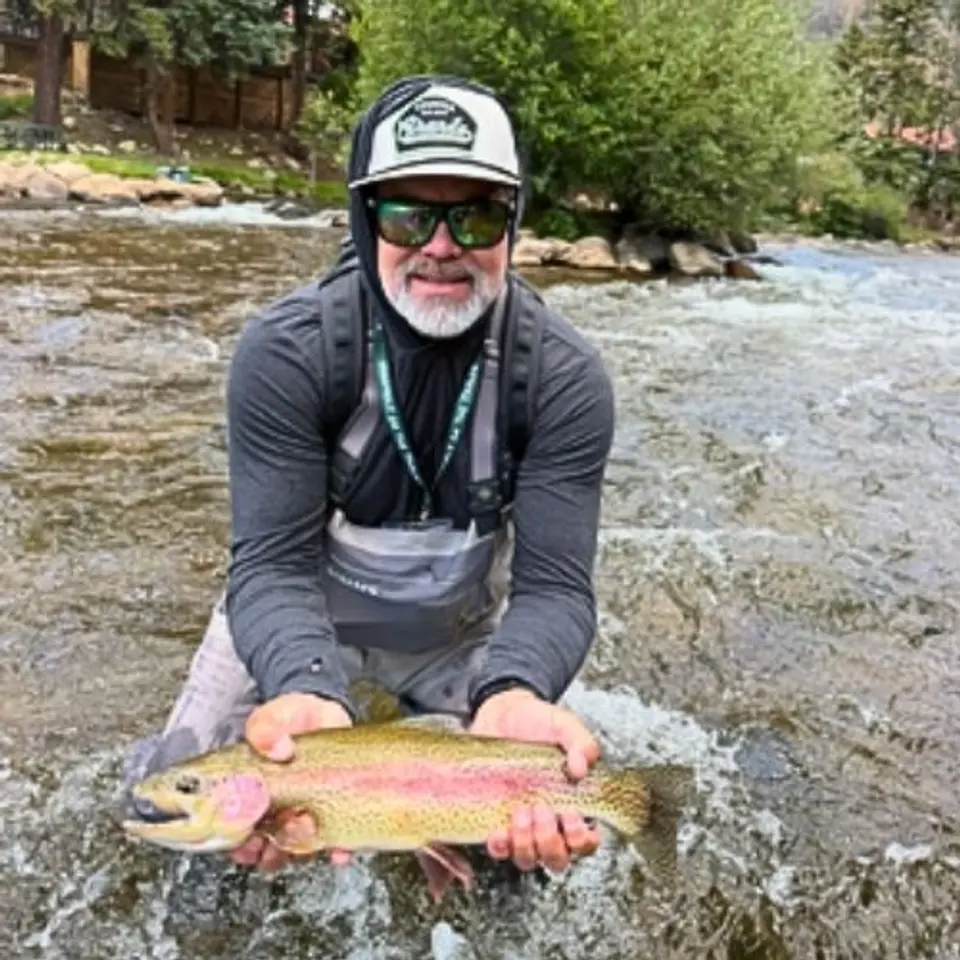
During daylight, however, these trout have seen the program. Long leaders, light tippet, tiny flies and excellent drifts are part of the game, and mistakes usually get noticed fast. As John put it, “It can be quite technical, but the payoffs are big.” Every once in a while, though, the Taylor apparently forgets it’s supposed to be difficult.
The Day a Nine-Year-Old Broke the Taylor River
John has guided experienced anglers who have traveled the world, fished for decades and arrived on the Taylor with plenty of confidence, only to get skunked or eke out one or two trout. Then one day he took a nine-year-old kid fishing, and a huge caddis hatch erupted.
What followed was ridiculous. John described fish rising everywhere, and the kid started hooking trout on seemingly every cast, including browns around 20 inches. His grandfather wanted John to concentrate on the boy, so Grandpa basically ended up sitting on the bank watching the show.
The kid caught roughly 50 trout in about three hours and then got tired and quit. John laughed when he told me, “He had no idea.” Imagine spending decades learning reach casts, mends, entomology, knots and presentation—and then watching a nine-year-old catch 50 trout before deciding this whole fly-fishing thing was getting a little boring.
John still remembers the river that day. “It looked like the water was boiling, where there were so many fish rising.”
There’s Another Taylor Above the Reservoir
The Hog Trough gets the headlines, but one of the things I liked most about this conversation was discovering just how different the Taylor becomes upstream. Above Taylor Reservoir, forget the technical tailwater for a minute.
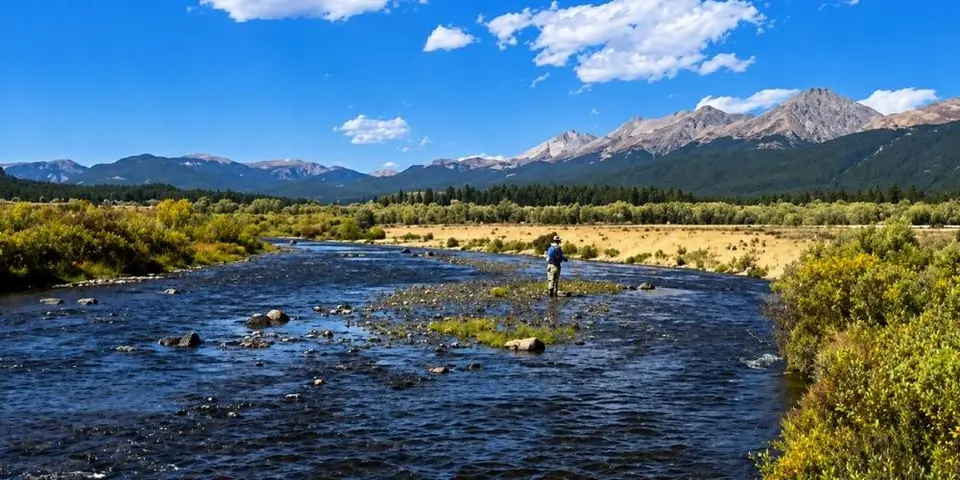
Now you’re around 10,000 feet, with the Collegiate Peaks in the distance, snow still hanging on the mountains in July and a freestone river winding through a broad mountain valley. There’s pocket water, short runs, undercut banks, willows, summer caddis and great terrestrial fishing. Better yet, John says roughly 10 to 15 miles of the Upper Taylor is mostly public water.
And if you’re willing to poke around, the possibilities spread out fast. “There’s endless opportunities,” John told me. “If you’re willing to do a little bit of an off-road drive or a hike, you can get way back there into some awesome rivers.”
That sounds more like my kind of crowd.
And Then There’s the Broken Reel...
Every good fishing river needs a story that makes absolutely no sense, and the Taylor has one. John was guiding a woman who hooked a huge rainbow early in the day and broke it off. Later, a second fish tangled her line so badly around the reel that John took the reel apart—and promptly dropped a piece of it into the river.
That rod was done for the day, so he left it on the bank and continued the trip. Hours later, John returned for the broken outfit and, for reasons he still can’t quite explain, flicked the flies into the river with only a few feet of fly line extending beyond the rod tip.
A huge rainbow ate.
Now John had no functioning reel, no net and almost no fly line. He followed the fish up and down the river, basically using his body as the drag, and somehow landed it. Then he noticed something that made the whole story even better: listen to the podcast to hear the rest of the story
Listen to the Full Taylor River Episode
That story alone is worth hearing John tell it, but there’s a lot more to the Taylor than monster trout and dumb luck. In the full episode, John and I get into how to approach this technical fishery, what separates the upper and lower river, the hatches, public access, the Hog Trough, and how a kid can catch 50 fish while an experienced angler gets humbled.
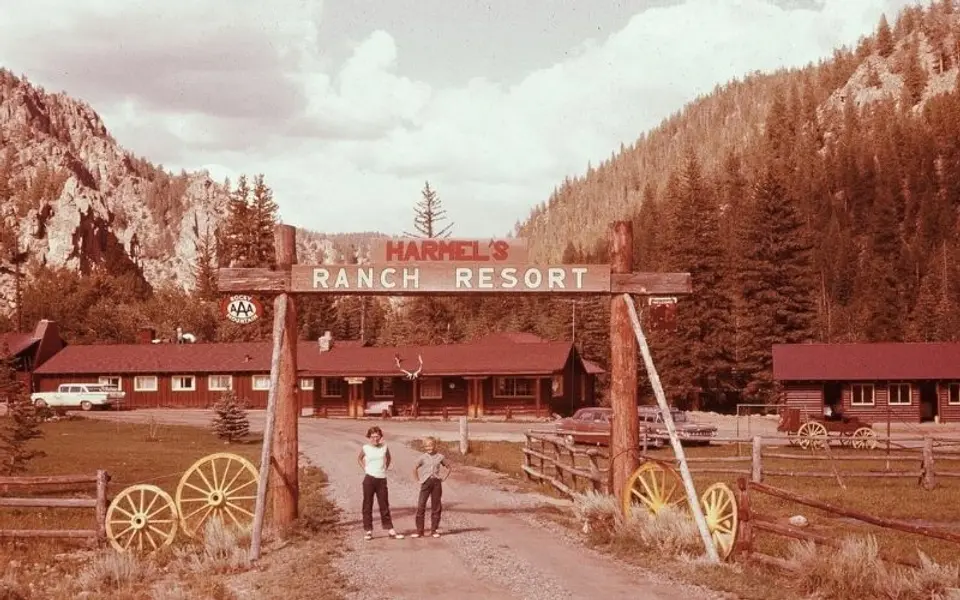
We also get into John’s own unlikely journey—from an office job in Chicago to bartending nights in Colorado so he could fish a couple hundred days a year. And the story of how he came to work for Harmel's, a ranch that has been in operation since 1958. Somewhere along the way, fly fishing stopped being something he did and became the life he built.
If the Taylor River is already on your fly-fishing bucket list, you’ll want to hear this one. And if it isn’t, give John about an hour.
Listen to “Hog Heaven on the Taylor River with John Evon” on the Destination Angler Podcast.
Going Ninja: Hunting Giant Trout on the South Island of New Zealand