Hooked on Steelhead: Matt Thornton's Obsession with the Fish of a Thousand Casts
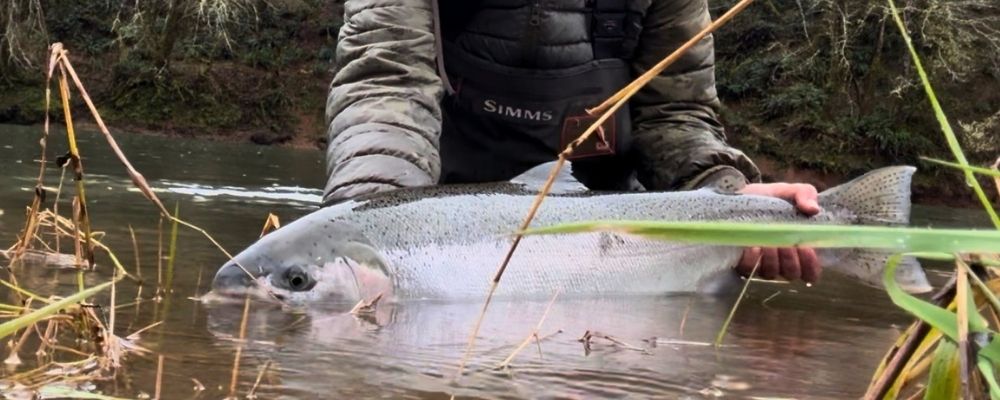
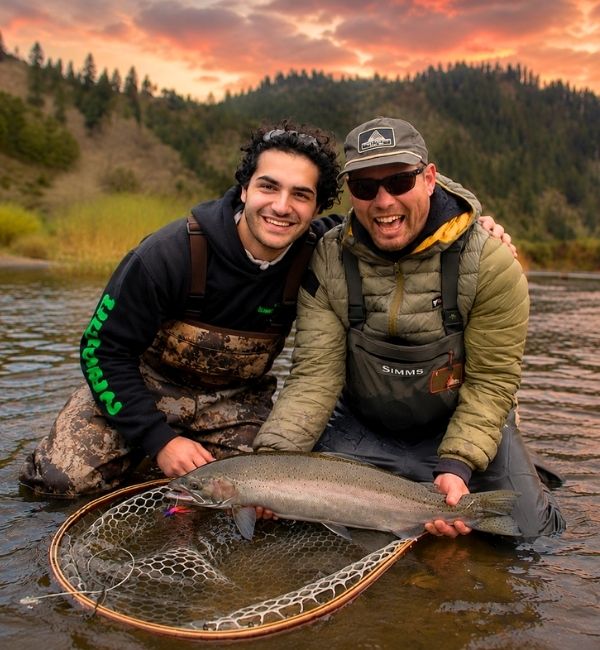
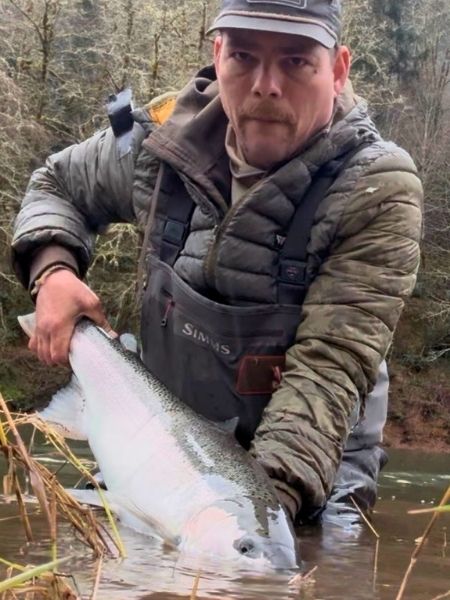
Steelhead fishing on Oregon's North Coast isn't a pastime — it's a test of character. For the uninitiated, these sea-run rainbow trout carry a reputation as the "fish of a thousand casts," a nickname that somehow manages to be both poetic and devastatingly accurate. But for Matt Thornton, a full-time guide and founder of the nonprofit The Wilderness Calling, that thousand-cast math isn't a deterrent. It's the entire reason he shows up. "It's the journey, man," Matt told me on a recent episode of the Destination Angler Podcast. "I just am grateful that I get to be there. And if a fish eats, that's awesome. If it doesn't, that's okay too."
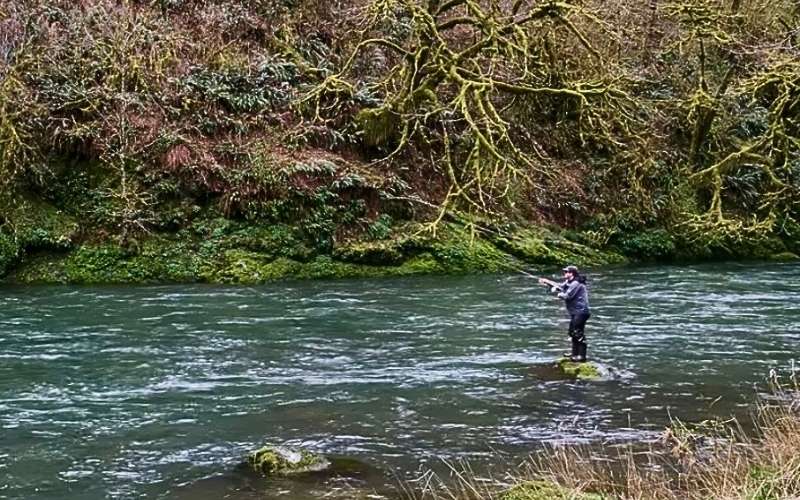
Our destination is the mist-shrouded rivers of the North Oregon coast, where winter steelhead runs draw a particular breed of angler — the kind willing to stand in freezing water for hours, swinging flies through runs that may or may not hold fish, fueled by little more than stubbornness and bad coffee. It's a world Matt knows intimately, having spent the better part of two decades chasing steelhead from Oregon to British Columbia and up to the remote tributaries of Bristol Bay, Alaska.
The Thousand-Cast Mindset
What separates steelhead anglers from everyone else isn't skill — it's a willingness to embrace failure as the default setting. Matt's friend Ryder once proved this in spectacular fashion. After Matt had methodically swung a familiar run, convinced he'd covered every inch of water, Ryder slipped on a snorkel and mask and slipped into the river. The GoPro footage told an embarrassing story: eight steelhead, sitting exactly where Matt's fly had passed, utterly uninterested. "One in twenty to maybe one in fifty is a player," Matt explained, with the hard-earned calm of a man who's made peace with rejection on a grand scale.
It's a reality that demands what Matt calls a "pit bull mentality" — the ability to keep casting with conviction when every rational signal says you're throwing line over empty water. He's seen grown men unravel over three-day trips without a grab, and he's watched first-timers stumble into fish on dumb luck. Neither outcome changes the fundamental equation: you get what you give.
"The qualifying factor is just trying to figure it out every day, day in, day out," Matt said. "What are the minor details that I can do and adjust today to catch a fish? And is that the reason that I caught this fish, or was it just here?"
Two Hands and a Harder Path
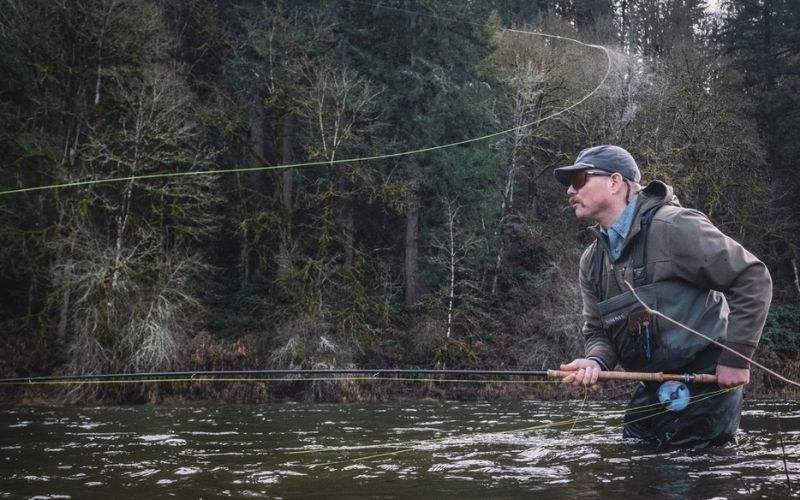
Matt didn't grow up swinging flies with a two-handed rod. He came to spey fishing the way many do — reluctantly, then obsessively. "You can learn to spey cast in an hour," he noted, "but to do it well is kind of a lifetime pursuit." When winter steelhead are holding in cold water, sluggish and unwilling to move far for a fly, the margin for error shrinks to almost nothing. The speed of the swing, the depth of the fly, the color you choose — each variable matters, and none of them comes with a guarantee.
This is the "hard way," and Matt wears it like a badge. He has little patience for what he calls "shame balling" — the bead-and-indicator approach that prioritizes numbers over experience — unless it serves a scientific purpose. "I learned a lot about detachment from outcome," he told me, "about what actually matters when we're fishing for steelhead."
Following Fish Into the Unknown
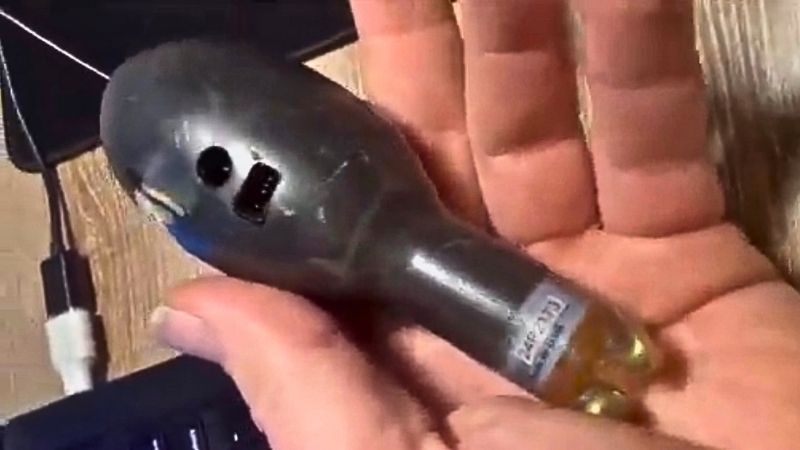
Somewhere along the way, Matt's obsession took a scientific turn. His nonprofit, The Wilderness Calling, is now leading a satellite tagging program designed to answer a question that has stumped fisheries biologists for decades: where do Oregon steelhead go once they hit the ocean?
The tags cost five thousand dollars apiece, and every deployment is a high-stakes gamble. The fish must survive the tagging process, migrate to saltwater to activate the tag, and carry it long enough for meaningful data to transmit. Season one raised twenty-three thousand dollars. Season two brought in forty thousand, with checks from the Wild Steelhead Coalition and Trout Unlimited. The preliminary results have already flipped assumptions on their head — one tagged fish went north toward Alaska, another headed south, hinting at ocean-current dynamics nobody predicted.
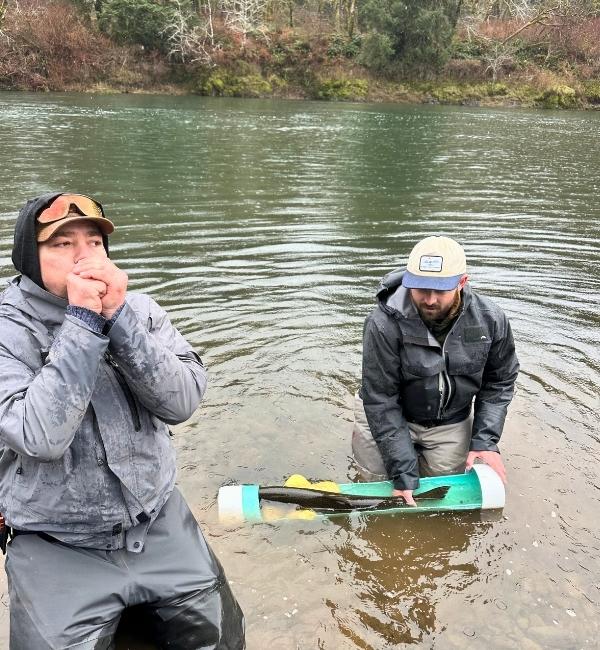
The final tag of his most recent season pushed Matt deep into April, fishing alone on the Trask River, needing a very specific fish: a hen, over twenty-four inches, headed downriver. After a full day of grinding, one perfect cast into a difficult seam produced the take he needed. Landing and tagging that fish solo — knowing a five-thousand-dollar transmitter and months of planning hung on every move — was, he admitted, one of the most relieved moments of his career.
Matt has stories that go well beyond steelhead, too — like the time he fibbed his way into an Alaska guiding job and found himself helicoptered into a remote river with a retired Norwegian special forces client who eventually looked at him and said, "I wanna go home, man." Or the afternoon he spent guiding a former president and his famously competitive wife. But you'll have to listen to the full episode to hear how those turned out.
Matt Thornton brings equal parts grit, science, and self-deprecating humor to this conversation about what it really means to chase the fish of a thousand casts. If you've ever stood in a river wondering whether you're wasting your time — or if you just want to hear the full Alaska helicopter story and the Boomhauer-the-dog fish-fighting simulator — this one's for you. Catch the full episode of the Destination Angler Podcast wherever you get your podcasts or here
.
Patagonia Before the World Found It